
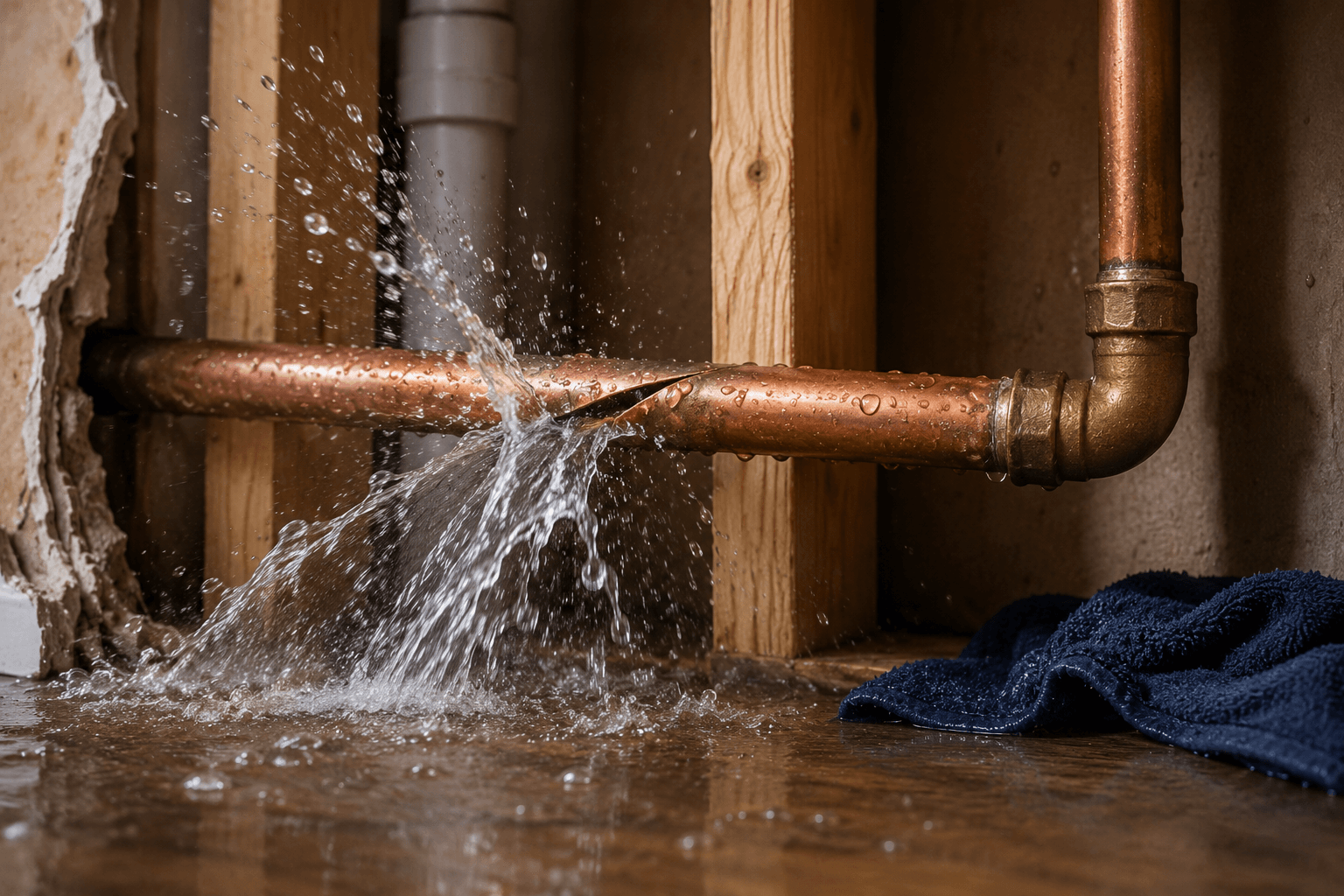
A burst pipe can happen unexpectedly and quickly turn a small plumbing problem into a serious water emergency. Within minutes, escaping water can damage walls, floors, ceilings, furniture, electrical equipment, and other parts of a property. Knowing what to do immediately can help reduce the damage while you arrange professional assistance.
Whether the problem occurs at home, in an office, or in a commercial property, taking the right steps can make a significant difference. Here is a practical guide on what to do when a pipe bursts.
1. Shut Off the Main Water Supply
The first priority is to stop the flow of water. Locate your property’s main water shut-off valve and turn it off as quickly as possible. This can significantly reduce the amount of water entering the damaged pipe.
If you know which local valve controls the affected fixture or section of plumbing, you may be able to shut that valve off instead. However, when the source is unclear, turning off the main supply is generally the safest immediate step.
2. Turn Off Electricity Near the Water
Water and electricity can create a dangerous situation. If water has reached electrical outlets, appliances, extension cords, or electrical equipment, do not touch them while standing in water.
If it is safe to do so, switch off the affected electrical circuit from a dry location. If you are unsure whether it is safe, stay away from the area and contact a qualified professional.
3. Open Faucets to Relieve Pressure
Once the main water supply has been turned off, opening nearby faucets can help release remaining pressure in the plumbing system. This may allow some water trapped inside the pipes to drain.
Do not assume that opening a faucet will stop the leak by itself. The damaged pipe still needs to be inspected and properly repaired.
4. Protect Furniture and Other Belongings
If it is safe to enter the affected area, move furniture, electronics, documents, and other valuable items away from the water. Use buckets or suitable containers to catch dripping water where possible.
Avoid walking through areas where water may have reached electrical equipment. Safety should always come before attempting to save belongings.
5. Remove Standing Water Carefully
After the water supply has been stopped and the area is considered safe, remove standing water as soon as practical. Towels, mops, wet vacuums, or other appropriate equipment can help minimize the amount of moisture left behind.
Quick action is important because prolonged moisture can contribute to damaged materials, unpleasant odors, and mold growth.
6. Identify Where the Pipe Has Burst
Try to determine where the water is coming from, but do not open walls, floors, or ceilings just to find the damaged pipe. A burst pipe may be located behind a finished surface or in another inaccessible part of the plumbing system.
If you can clearly see the damaged section without putting yourself at risk, note its location and provide that information to the plumbing professional.
7. Contact a Plumbing Professional
A burst pipe requires more than simply stopping the water. The damaged section needs to be assessed to determine why it failed and what repair is necessary.
Professional assistance can help identify the source of the problem, repair or replace the damaged pipe, and check the surrounding plumbing for additional issues. If significant water damage has occurred, further inspection and drying may also be necessary.
What Not to Do After a Pipe Bursts
Avoid attempting a complicated repair with tape, glue, or makeshift materials, especially when the damaged pipe is inside a wall or under flooring. Temporary solutions may not withstand water pressure and could make the resulting damage worse.
You should also avoid ignoring a small leak after the water has been turned back on. A pipe that has already failed may indicate a larger plumbing issue that needs attention.
Act Quickly, But Put Safety First
A burst pipe is an emergency, but rushing into the affected area without considering electrical hazards or structural damage can create additional risks. The most important steps are to stop the water supply, stay away from unsafe electrical areas, protect your belongings when possible, and arrange professional plumbing assistance.
If you experience a burst pipe or similar plumbing emergency, do not try to handle a complicated repair yourself. Leave the repair to a qualified professional who can safely assess the damage and restore the plumbing system properly.
Have a plumbing emergency or a plumbing question that is not covered here? Contact a qualified plumbing professional for practical advice, emergency assistance, and the right solution for your property.