

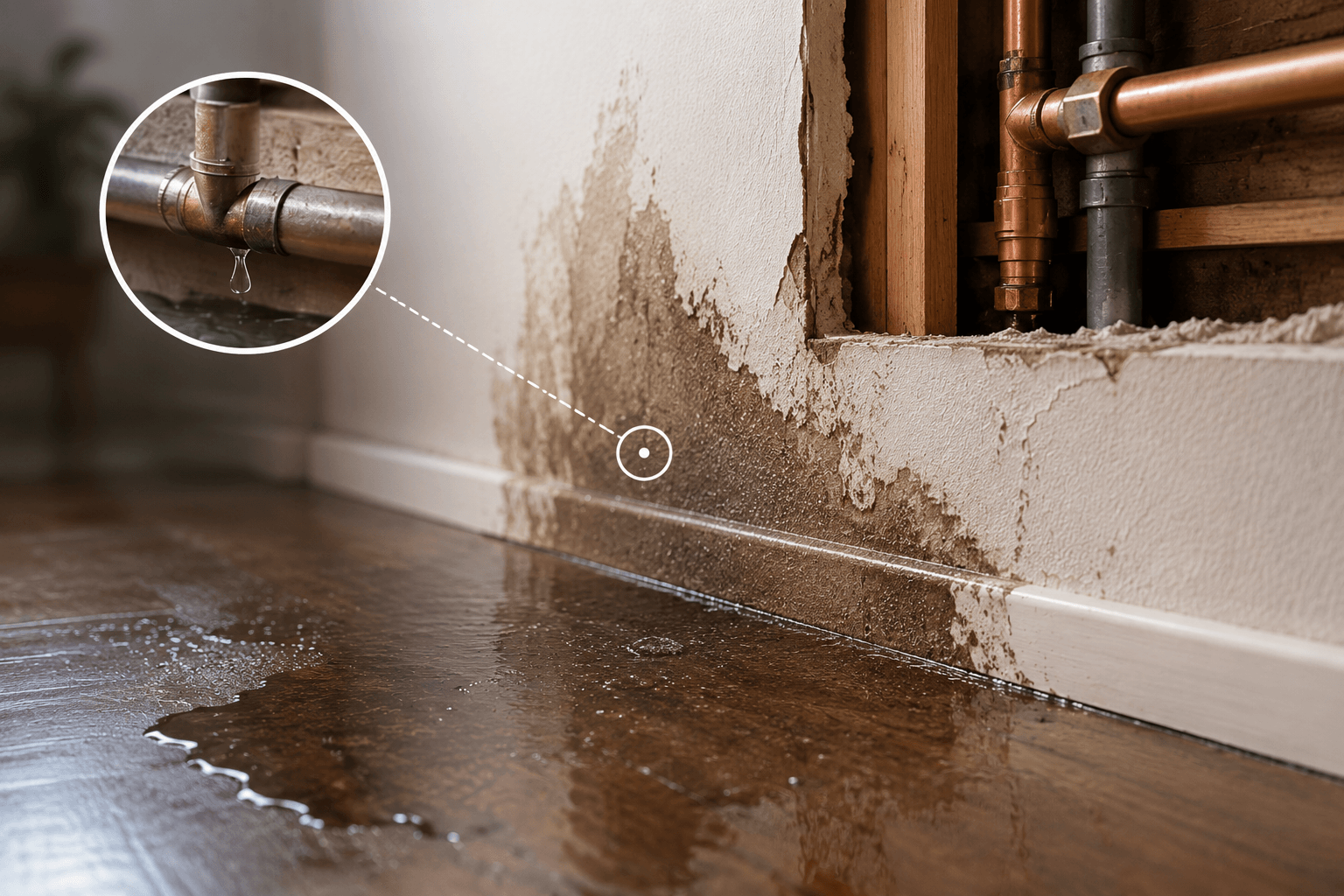
Water leaks are not always easy to spot. A leaking pipe behind a wall, beneath the floor, or under a fixture can continue unnoticed for days or even weeks. While a small leak may seem harmless at first, it can eventually lead to water damage, mold growth, higher utility bills, and costly repairs.
Knowing the early warning signs can help homeowners and businesses identify a potential plumbing problem before it becomes more serious. Here are seven signs that may indicate you have a hidden water leak.
1. An Unexpected Increase in Your Water Bill
One of the easiest signs to overlook is a sudden increase in your water bill. If your water usage and daily routine have not changed, but your bill is noticeably higher, a hidden leak could be responsible. Even a small leak can waste a significant amount of water when it continues around the clock.
2. Damp or Discolored Walls and Ceilings
Water leaking inside a wall or ceiling can leave visible marks over time. Look for yellow, brown, or darker patches, bubbling paint, peeling wallpaper, or areas that feel unusually damp. These signs should not be ignored, especially when they appear without an obvious source of water.
3. Musty or Damp Odors
A persistent musty smell can be another warning sign. Hidden moisture creates an environment where mold and mildew can develop, particularly in enclosed spaces with limited ventilation. If a room smells damp even when there has been no recent spill or flooding, there may be moisture trapped somewhere nearby.
4. Sounds of Running Water
Hearing water when every faucet, toilet, and appliance is turned off may indicate that water is moving through a leaking pipe. A faint dripping, hissing, or rushing sound behind a wall can be difficult to locate, but it can provide an important clue that something is wrong with the plumbing system.
5. Warped Flooring or Damaged Surfaces
Water beneath flooring can cause materials to swell, buckle, warp, or become soft. Hardwood, laminate, carpeting, and other flooring materials may show changes when exposed to moisture for an extended period. If a particular section of flooring suddenly feels different from the surrounding area, investigate the possibility of a leak.
6. Mold or Mildew Appearing Unexpectedly
Mold and mildew are commonly associated with excessive moisture. While they can develop because of poor ventilation, recurring mold in a specific area may also point to a concealed plumbing leak. Pay particular attention when mold repeatedly returns after cleaning.
7. Low Water Pressure
A noticeable drop in water pressure can sometimes be connected to a leak somewhere in the plumbing system. Although low pressure can have several causes, including issues with fixtures or the main supply, an unexplained change should be checked rather than ignored.
Why Early Leak Detection Matters
A hidden leak can gradually cause structural damage and increase water consumption without being immediately obvious. Finding the problem early can help reduce the extent of the damage and prevent a relatively simple plumbing issue from becoming a major repair.
If you notice any of these signs, avoid trying to locate or repair a hidden leak yourself, particularly when the source is behind a wall, beneath flooring, or connected to the main plumbing system. Incorrect repairs can make the problem worse or cause additional damage. It is safer to have the plumbing inspected by a qualified professional who can identify the source and recommend the appropriate solution.
Have a plumbing question that is not covered here? Contact a qualified plumbing professional for practical advice, proper inspection, and reliable help with your plumbing needs.