

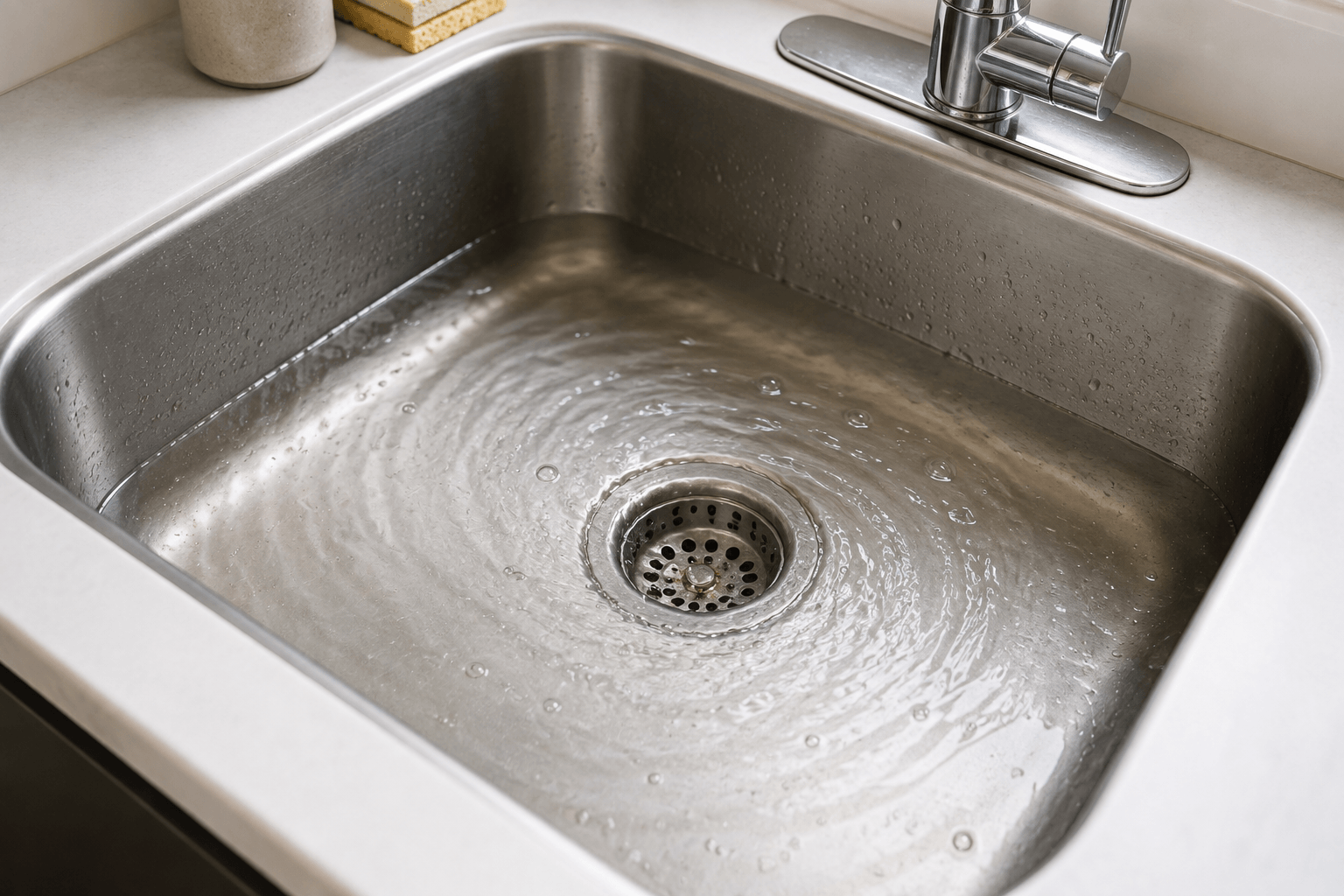
A sink that drains slowly may seem like a minor inconvenience, but it can be an early sign of a developing plumbing problem. Water that takes longer than usual to disappear can indicate a buildup inside the drain, a problem with the trap, or an issue further along the plumbing line.
Understanding the possible causes can help homeowners and businesses recognize when a slow drain needs attention before it becomes a complete blockage.
1. Hair and Soap Buildup
Bathroom sinks commonly collect hair, soap residue, toothpaste, and other materials over time. These substances can stick to the inside of the drain and gradually restrict the opening.
At first, the water may drain only slightly slower than normal. As more debris accumulates, however, the blockage can become more noticeable.
2. Food and Grease in the Kitchen Sink
Kitchen sinks are particularly vulnerable to food particles, grease, and oil. Small amounts can enter the drain during everyday use and eventually combine into a thick buildup.
Grease is especially problematic because it can stick to the inside of pipes and collect other debris passing through the drain. Pouring cooking oil or grease down the sink can therefore contribute to recurring drainage problems.
3. A Blocked P-Trap
The P-trap is the curved section of pipe underneath a sink. It holds a small amount of water to help prevent sewer gases from entering the property.
Because of its shape, the P-trap can also collect debris. Hair, food particles, and other materials may accumulate inside it and restrict water flow, causing the sink to drain slowly.
4. Mineral or Pipe Buildup
In some plumbing systems, minerals can gradually accumulate inside pipes. Over time, this buildup can reduce the diameter of the pipe and make it more difficult for water to pass through.
This type of restriction can be harder to identify because the problem may develop gradually rather than appearing as a sudden blockage.
5. A Deeper Drain Blockage
Sometimes the obstruction is not located directly beneath the sink. A blockage further down the drain line can also slow the flow of water.
If plunging or basic cleaning does not improve the drainage, the problem may be deeper within the plumbing system. Multiple slow drains in the same property can be another indication that the issue is affecting a larger section of the drainage line.
6. Improper Drain Venting
Plumbing systems use ventilation to help maintain proper air pressure within the drainage system. If a vent becomes blocked or restricted, water may not flow as efficiently.
A slow-draining sink accompanied by gurgling sounds, unusual odors, or other drainage problems may indicate that the issue is not simply a clogged sink.
Signs Your Slow Drain Needs Professional Attention
A slow sink should not always be treated as something that will eventually fix itself. If the drainage problem keeps returning, becomes progressively worse, produces unpleasant odors, or affects several fixtures, it may require a professional inspection.
Repeatedly using strong chemical drain cleaners can also be problematic. These products may provide temporary relief but do not necessarily address the underlying cause of the blockage and can potentially damage certain plumbing components when used incorrectly.
How to Help Prevent Slow Drains
Simple habits can reduce the likelihood of recurring drainage problems. Use a drain strainer to catch hair and food particles, avoid putting grease and cooking oil down the sink, and clean removable drain components regularly.
It is also helpful to pay attention to changes in drainage speed. A sink that is gradually becoming slower may be easier to address before the drain becomes completely blocked.
When to Call a Plumbing Professional
A slow-draining sink is often a warning that something is restricting the flow of water. Identifying the actual cause is important, particularly when the problem keeps coming back or appears alongside other plumbing symptoms.
If your sink is draining slowly, avoid attempting complicated repairs or dismantling plumbing components without the proper knowledge and tools. Trying to fix the problem yourself can sometimes cause leaks, damage fittings, or make an existing blockage worse. It is better to leave the problem to a qualified professional who can inspect the drainage system and recommend the appropriate solution.
Have a plumbing question that is not covered here? Contact a qualified plumbing professional for practical advice and professional help with your plumbing needs.
Meta Description:
Find out why your sink may be draining slowly, from hair and grease buildup to blocked traps, mineral deposits, and deeper drain problems.
Meta Keywords:
slow draining sink, sink draining slowly, clogged sink, slow sink drain, sink blockage, plumbing problems, drain blockage, kitchen sink drain, bathroom sink drain, professional plumbing